What the Bureau does Each Room: a craft, and the life around it.
The Bureau shapes each Room around a single craft. Each works in two modes at once.
In ordinary use a Room is a working place: an atelier, a workshop, a tasting hall, a forge. People come not to watch a master from a distance but to work the material themselves, to put questions to the master, to talk with others who came for the same thing. A craft stays alive because it goes on being made together, not only shown.
Beneath that working life a Room holds a second purpose. It is a repository on analogue media chosen to endure for centuries: the knowledge without which the craft could not be remade, and the working evidence of the craft itself. Drawings and technical descriptions, books and records, samples of materials and tools, the parts and models of machines, demonstrations by masters, correspondence, whatever the keeper of the Room judges worth passing to those who come after. What enters the archive is settled by selection, not by completeness: not everything is kept, only what the craft could not be rebuilt without.
For that reason the Bureau's work begins before the walls. First the craft is read: what it is made of, what in it is alive, what stands to be lost and on what horizon, what can be set down on durable media and in what form. Everything else follows from that reading: what to keep, how the archive is ordered, what shape the space asks for. The craft is understood first, and built around second.
The Founder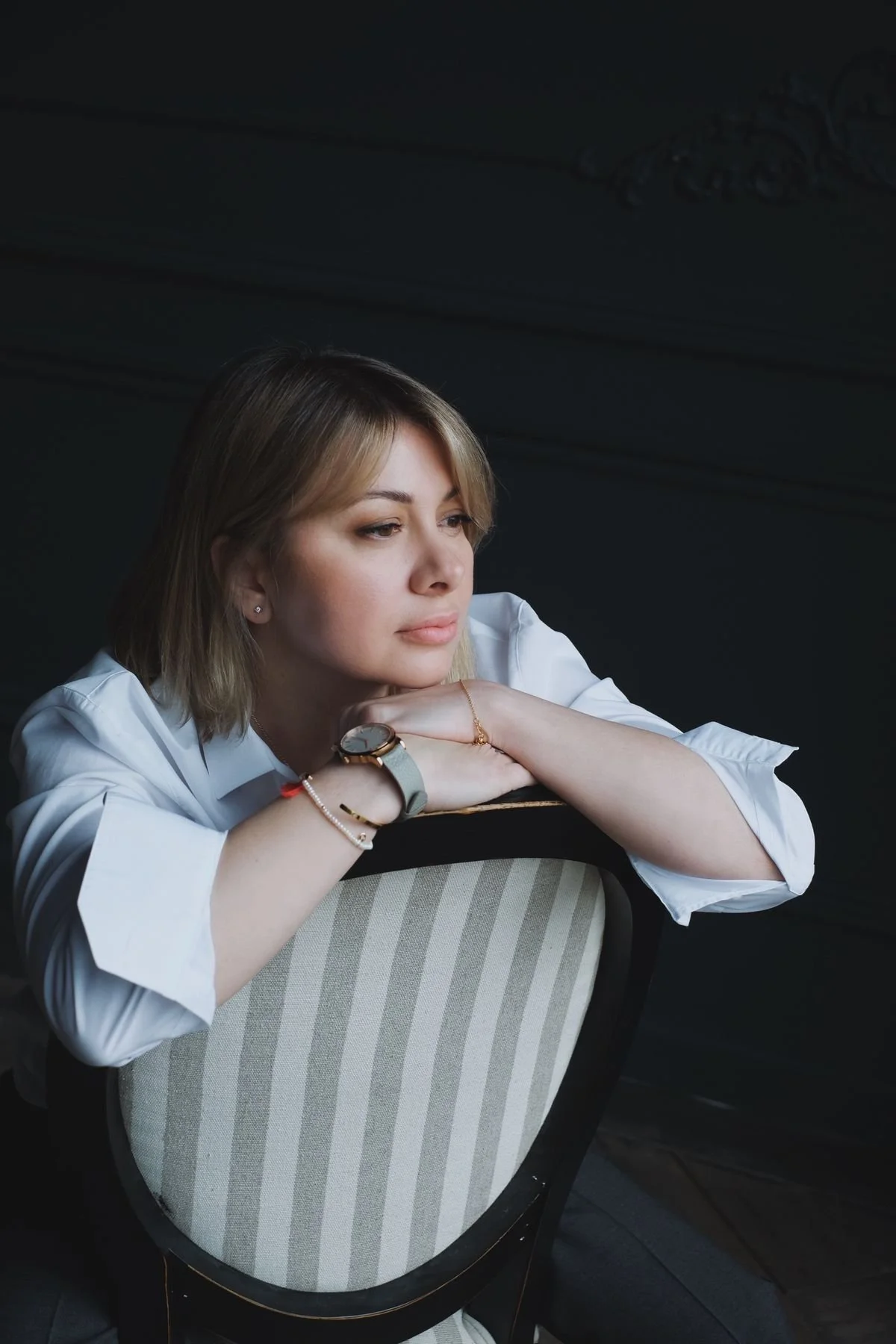
For twenty years I worked with companies on how they understand what they are and how they say it, launching products and bringing new things to market. One thing always mattered most: to listen. To hear the work more deeply than its owner describes it, and to hear the person it is made for. Without that, no brand holds, no product holds, and a place holds least of all.
Years ago I walked the Antinori cellars in Chianti. Twenty-six generations, unbroken since 1385, and what struck me was not the age but the tense: the family was building. New cellars, a museum, plans laid for heirs not yet born. The craft was not being guarded behind glass; it was being made again, every season, and set down for the ones who would come after. I went looking for the same thing elsewhere and rarely found it. Most crafts have no Antinori. The hands that hold them grow old, the work goes quietly, and nothing is set down.
Analogue Rooms came out of that: a place where a craft stays itself, where it can be practised by hand, and where the knowledge behind it is kept long after the rest has changed.
The ArchitectorEach Room takes the native form of its craft, and each craft asks for a different hand. For that reason the architecture of the first Rooms is the work of an invited bureau, chosen for the craft at hand, rather than a single resident architect. A spatial methodologist within the Bureau holds the language common to every Room.
Open positionsChief Archival Officer
Through every step, we've focused on staying true to our values and making space for thoughtful, lasting work.
Director of Practice
Through every step, we've focused on staying true to our values and making space for thoughtful, lasting work.
Partners and patient capitalThe Bureau is being formed for a long horizon, and so is the capital behind it.
We are in conversation with family offices and patient investors who measure a venture in yeares rather than quarters, and with houses and institutions ready to entrust a craft to a Room